Ph.D. Candidate, University of Connecticut
Spatial patterns of denitrification potential and soil nutrient stocks in a beaver-created ecosystem
Conference Travel Grant Type 2
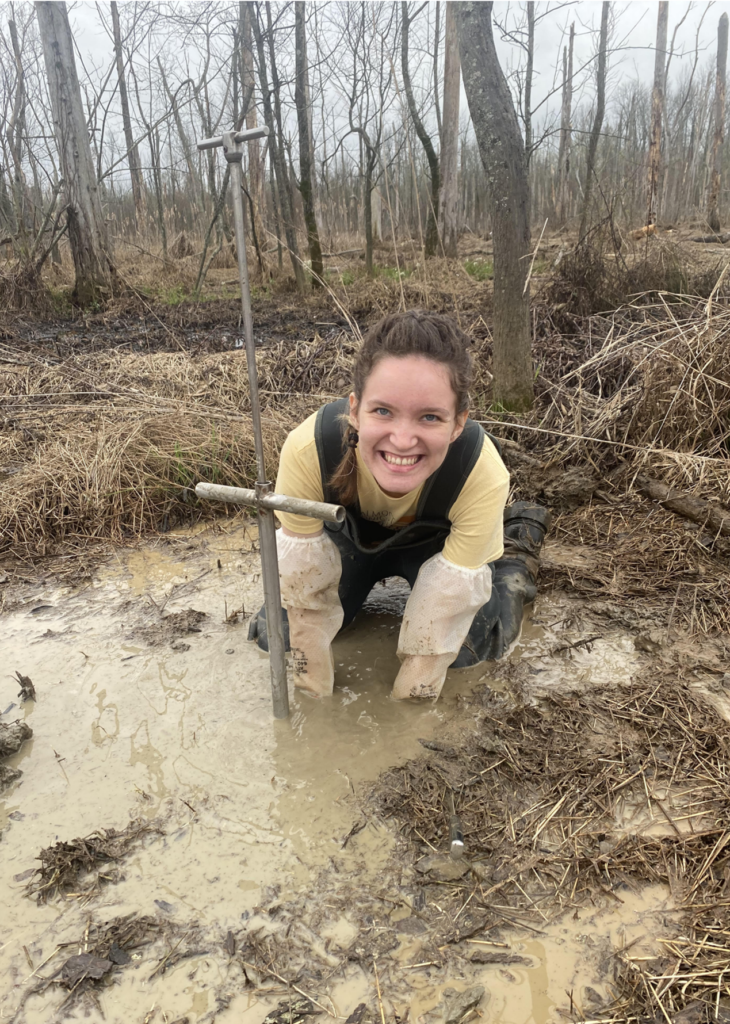
“Beaver (Castor canadensis) can create heterogeneous ecosystems through hydrologic alterations, though the spatial variation of nutrient storage and cycling within beaver-created ecosystems is not well understood. We aimed to determine where soil carbon and nutrient (nitrogen, phosphorus) storage and processing (i.e., denitrification) occur spatially within a beaver-created ecosystem along the Fenton River in northeastern Connecticut, USA. Soil cores were collected to a 30 cm depth at random points (n = 20) encompassing three vegetation zones (meadow, emergent wetland, and open water). Cores were divided into 10 cm increments and analyzed for denitrification potential using denitrification enzyme assays. Preliminary data suggest that denitrification potential was highly variable, ranging from approximately zero to > 3900 ng N hr-1 g soil-1. Denitrification potential appeared highest and most variable in the top 10 cm of the core and was positively correlated to soil moisture in the top 20 cm, but not in the bottom 10 cm. While denitrification potential varied spatially throughout the beaver-created ecosystem, there was no clear pattern relating to dam proximity or vegetation zone. However, the two highest points were located adjacent to each other in an emergent wetland zone, representing a possible hot spot for denitrification. Lab processing of cores is ongoing for carbon and nutrient stocks and additional variables that may influence denitrification rates. Our results may provide more accurate estimates of biogeochemical cycling in beaver-created ecosystems and inform management decisions regarding increased beaver populations in the northeastern United States.”