Ph.D. Candidate, Stony Brook University
Phenology and Ecological Function of Salt Marshes after Sediment Addition Events
Conference Travel Grant Type 2
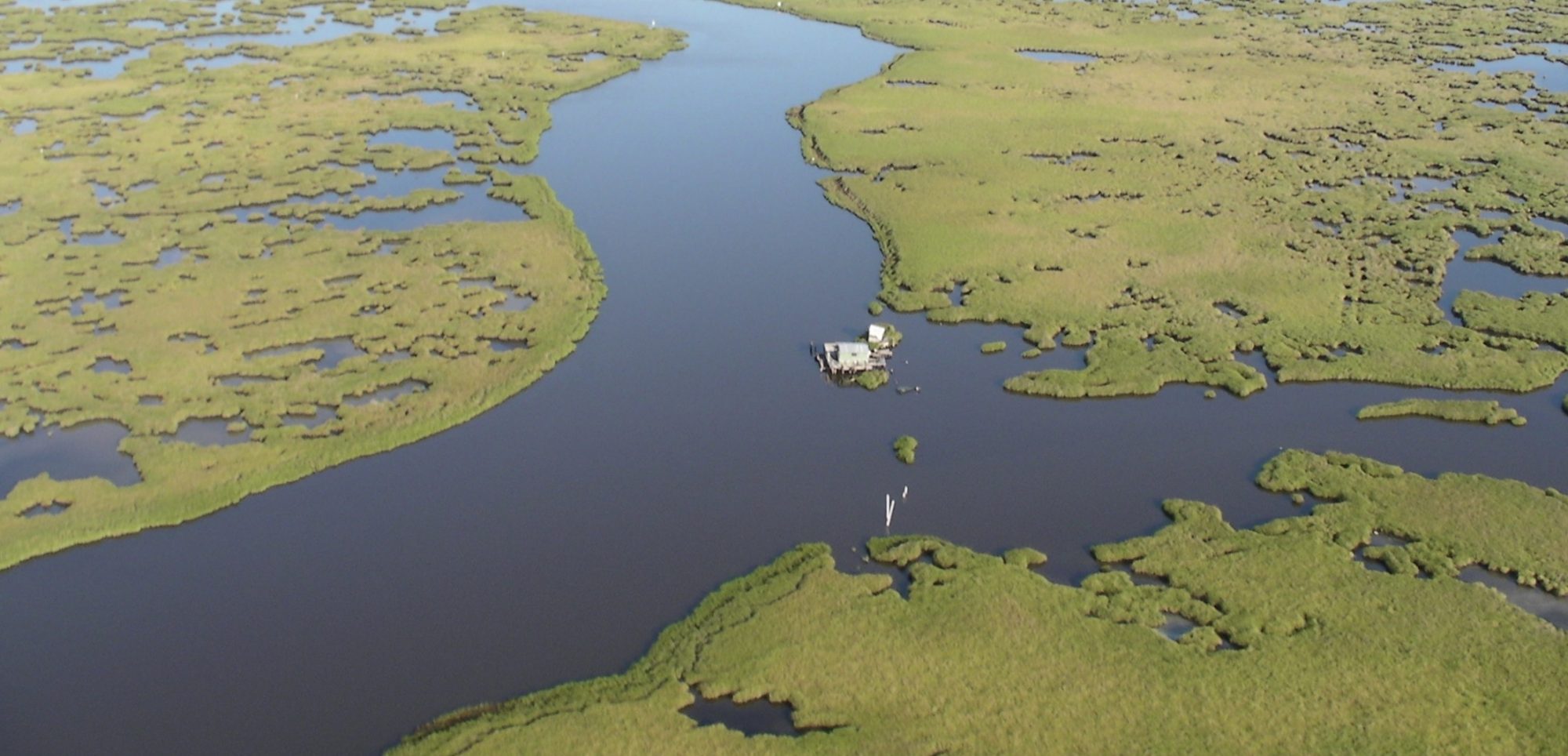
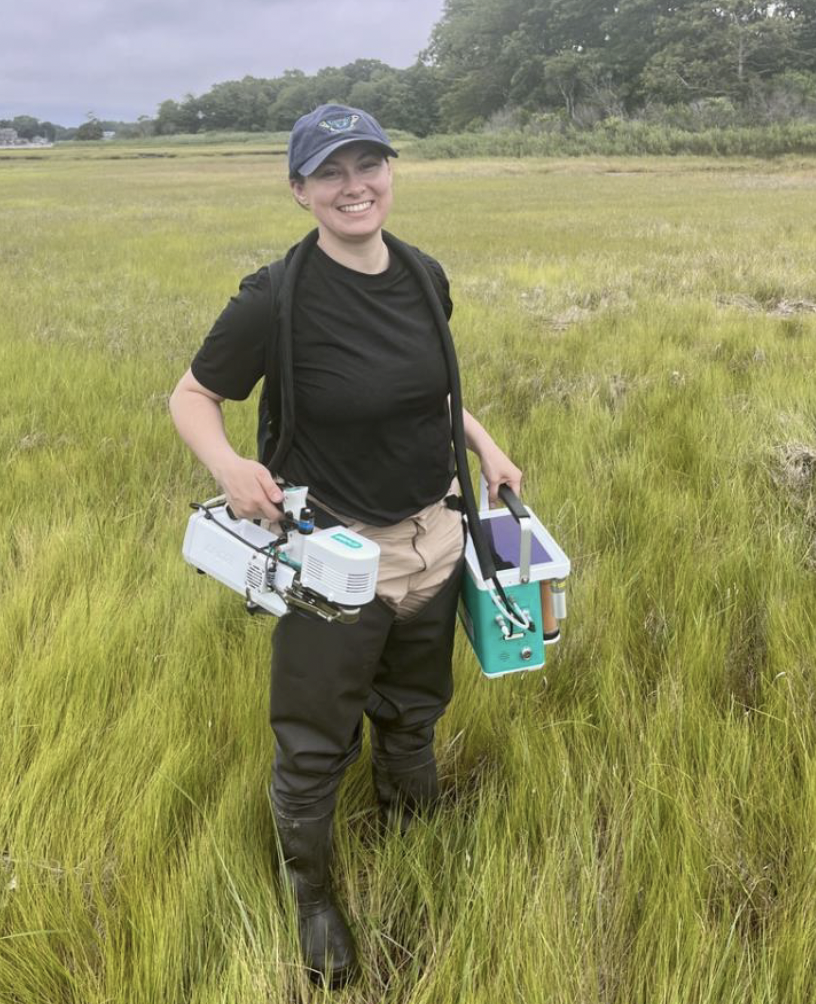
“Tidal salt marshes in the Northeastern U.S. are threatened by accelerated sea level rise causing salt marsh vegetation to convert to open water. Many wetland restoration efforts have worked against this threat by depositing sediment to raise the marsh platform’s elevation. While the goal of sediment addition is to prevent the loss of marshes due to sea level rise and erosion, vegetation reestablishment and recruitment has been extremely slow and limited at many restoration locations. We are investigating when and how the ecological functions of a salt marsh are restored after sediment addition events take place, with the hope of informing future coastal wetland restoration efforts. We have built a database of sediment-addition-based salt marsh restoration projects throughout the Northeastern US. Leveraging unique high spatial (3m), spectral (4 band) and temporal resolution (daily) remote sensing data, we will examine the changes over time in aboveground plant productivity and phenology, before, during, and after sediment placement as a proxy for the restoration of ecological function. We focus on vegetation, as it plays a pivotal role in providing ecosystem services within marshlands. Through remote sensing, we will construct seasonal plant productivity curves to determine the health and robustness of marsh vegetation, and how this has changed since 2017. We have collected field-based measurements of plant physiological condition and productivity from 9 marshes restored with sediment deposition, and 7 unrestored control marshes, to calibrate and validate the remote sensing data. By collecting and comparing historic and current data on a broad range of sediment addition projects, we aim to identify what common factors contribute to successful salt marsh revegetation. We expect that many restored sites will not reach the same level of plant productivity and ecological functioning as their local reference marshes, especially if the sediment addition project was completed recently. However, when we do encounter restored sites with robust ecological function, we will attempt to extract the key factors that led to this success. While we cannot examine every variable, we hope that with a wide variety of sites, we will be able to inform and improve future salt marsh restoration efforts.”